Blended learning is also often described as a way of delivering learning, not a complete learning method in itself. It combines online and face-to-face formats, but it does not automatically define how learning should take place. For this reason, it needs additional methods to become effective.
Learning design and instructional design
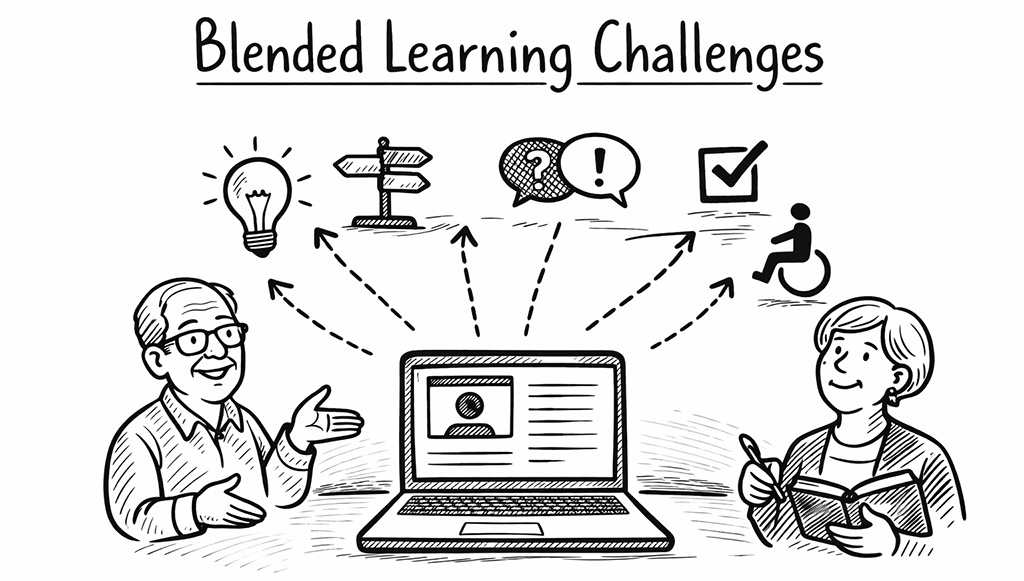
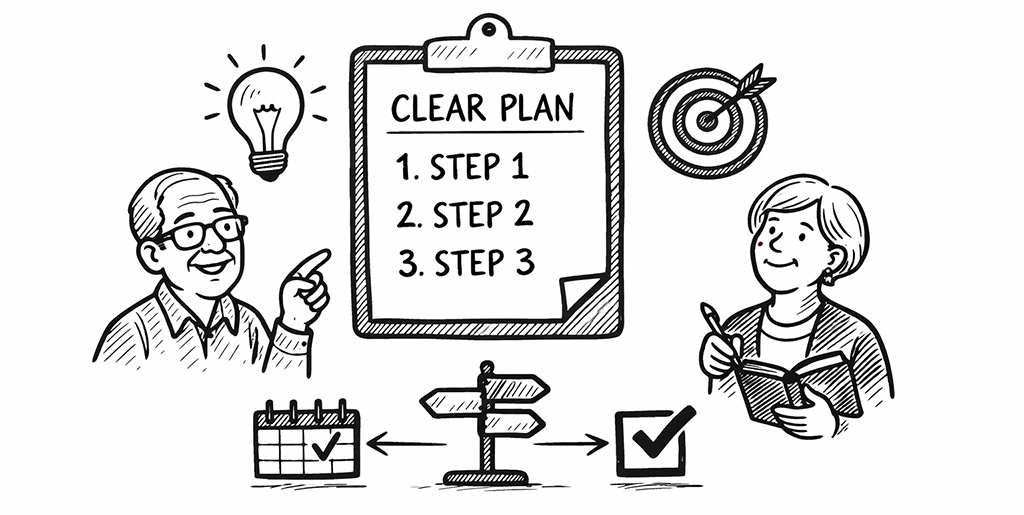
One of the key challenges is the need for a clear and well-structured learning design. Simply combining online and face-to-face elements is not enough. Learners need a logical flow, clear instructions, and a consistent structure that helps them understand what to do and when.
All methods need to be part of a clear and structured learning design. Blended learning becomes effective when different methods are combined in a purposeful and meaningful way. This ensures that learning is not only flexible, but also meaningful and well guided.
Effective blended learning also depends on strong instructional design — planning learning with clear objectives, aligned activities, and meaningful assessment. Good instructional design connects all elements of the learning process and ensures that methods, content, and outcomes fit together.
Active, self-directed and collaborative learning
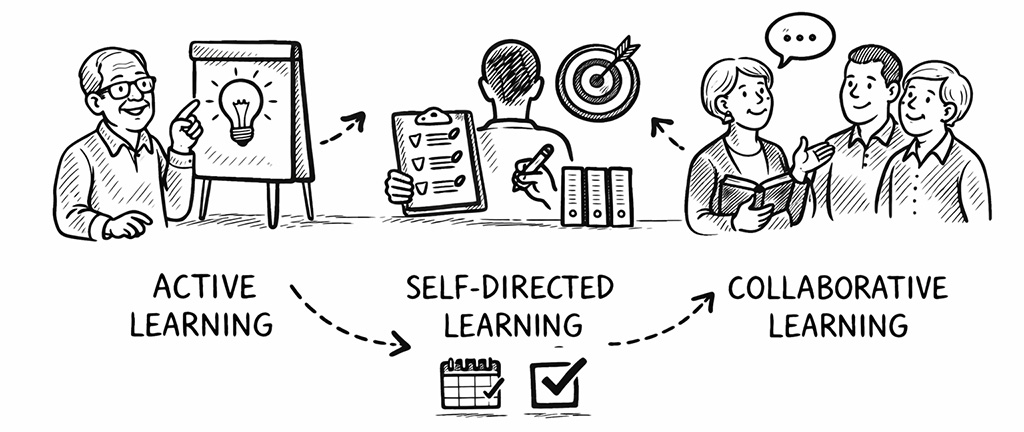
Learners should not only receive information, but actively work with it. This can include discussions, problem-solving tasks, case studies, or practical exercises. Active learning helps learners to understand and apply knowledge in a meaningful way.
Blended learning also requires strong elements of self-directed learning. Learners need support in planning their learning, setting goals, and managing their time. Simple structures, guiding questions, and clear tasks can help learners stay focused and organised.
Collaborative learning is another important method. Working with others supports motivation and more profound understanding. Group discussions, peer feedback, and small team tasks can be integrated both online and in face-to-face sessions.
Support, feedback and reflection
Adult learners benefit from regular feedback, encouragement, and opportunities to ask questions. Without this support, motivation can quickly decrease, especially during self-directed online phases.
Regular feedback and reflection are essential for learning success. Learners need opportunities to reflect on what they have learned and how they can improve. Short feedback loops, self-assessment, and guided reflection activities can support this process.

Accessibility, inclusion and a learner-centred approach
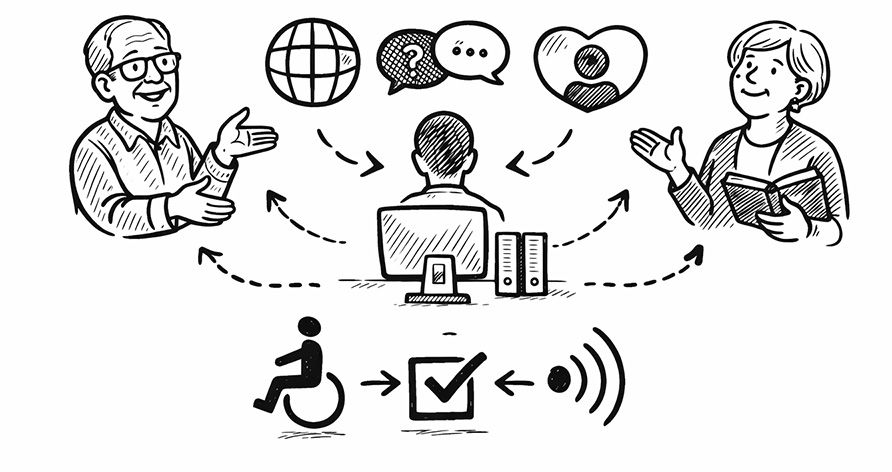
Accessibility and inclusion play a crucial role in blended learning. Not all learners have the same starting point — challenges often include barriers related to language, confidence, or prior learning experience. Using simple tools, clear language, and flexible formats can help ensure equal participation.
Ultimately, blended learning works best when it is learner-centred and easy to follow. Addressing these challenges requires thoughtful planning, but it also creates the opportunity for more flexible, engaging, and effective adult learning.